
Hike in Scams targeting taxpayers

Hike in Scams targeting taxpayers
HMRC has urged taxpayers to be particularly cautious about refund scams as the 31 January tax return deadline draws closer, with over 145,000 scam referrals for fake rebates and demands identified in the last 12 months.
Fraudsters are continuing to target people with offers of tax refunds or demanding payment of tax to get hold of personal information and banking details.
In the last 12 months, taxpayers reported nearly 145,000 scam referrals to HMRC, which was up 16.7%. In total 144,298 scam referrals were received between November 2023 and October 2024, up from 123,596 in the previous 12-month period.
HMRC have warned that: ‘If someone receives communication claiming to be from HMRC that asks for their personal information or is offering a tax rebate, check the advice on gov.uk to help identify if it is scam activity.’
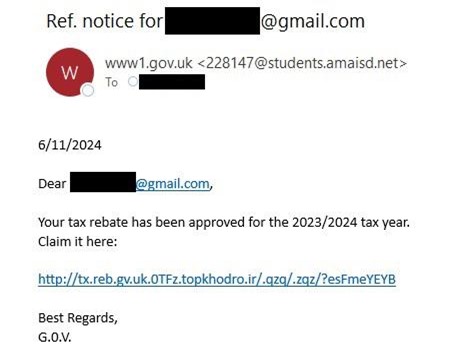
An example of a scam ‘style’ email has been shared below…
A few things to also consider, to avoid being spammed!
- HMRC will never leave voicemails threatening legal action or arrest or ask for personal or financial information over text message – only fraudsters and criminals will do that.
- HMRC will not contact taxpayers by email, text, or phone to notify that a refund will be paid or to recommend making a claim.
- HMRC have requested reporting anything suspicious helps them stop criminal activity and protect you and others who could have received similar bogus communication.
- Always use strong and different passwords on all accounts so criminals are less able to hack into personal accounts.
- If a phone call, text or email is suspicious or unexpected, do not give out private information or reply, and never download attachments or click on links as scammers use these to harvest data and infect computers and mobile phones with viruses or phishing attacks.
Importantly if you think you have received a scam email or phone call – please report it to HMRC, there are full details as to how to do this on the HMRC website.
Also, please note that a national campaign ‘Stop! Think Fraud’ earlier this year. Backed by organisations across law enforcement, tech, banking, telecoms and the third sector, a new website was created with advice on how to stay safe online. It can be found at www.gov.uk/stopthinkfraud