
Companies House issue warning regarding ‘fake invoices’ to Directors
Companies House issue warning regarding ‘fake invoices’ to Directors
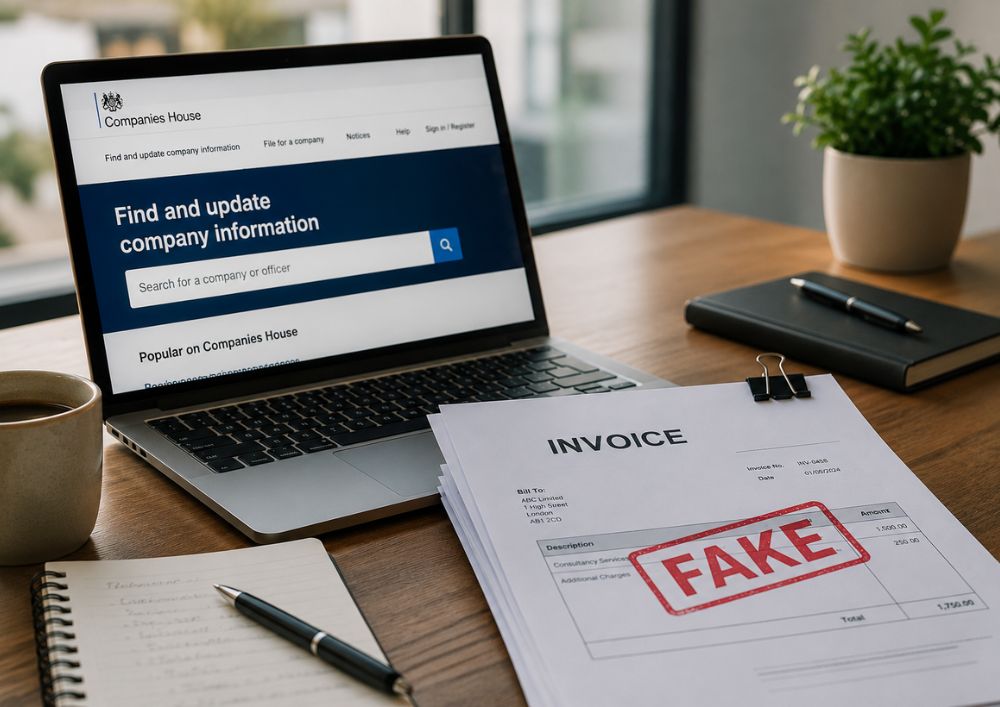
Companies House and the Intellectual Property Office (IPO) are running a campaign to warn about the rising risk of unsolicited payment requests from fraudsters posing as the company register, for example, with help on how to differentiate the fake from the genuine invoices.
The fake invoices are often detectable when the paperwork is examined but it is essential to be ‘vigilant about misleading requests for payments, sent by organisations not affiliated with government’, Companies House warned.
Invoices are usually posted via post to the company’s registered office address but can be sent by email too. Receiving an invoice in the post should be an immediate red flag so make sure these are checked carefully, particularly demands for payment for standard Companies House service and trademark renewals.
Companies House warned: ‘These invoices may request payment at a highly inflated price for services available for a much lower fee, or free of charge, directly from the legitimate sources: Companies House, IP attorneys or the IPO.’
‘Those who are unsure about a letter or email they’ve received, should contact Companies House, the IPO or the organisation representing their company directly before making any payment.’
Typical signs of a fake invoice are when the fraudsters demand payment to set up or claim a Companies House online account, authenticate accounts or verify details, and renew a trademark or include it on an ‘exclusive online register’.
To check if a letter or email asking for payment is genuine, it is essential to the following checks:
- check any website addresses included in the letter or email, and email addresses from generic domains – official Companies House and IPO services are provided through gov.uk;
- check emails cited on the letters as they are usually quite similar to gov.uk official addresses but will contain giveaway mistakes, typos and/or poor English;
- look for disclaimers stating the organisation is not affiliated with government;
- do not click on URL links requesting payment as these are often phishing and contain damaging computer viruses;
- contact Companies House or the IPO directly to verify any requests.